Connecting the Consumers’ Subconscious to your next Marketing Decision
Content Writing
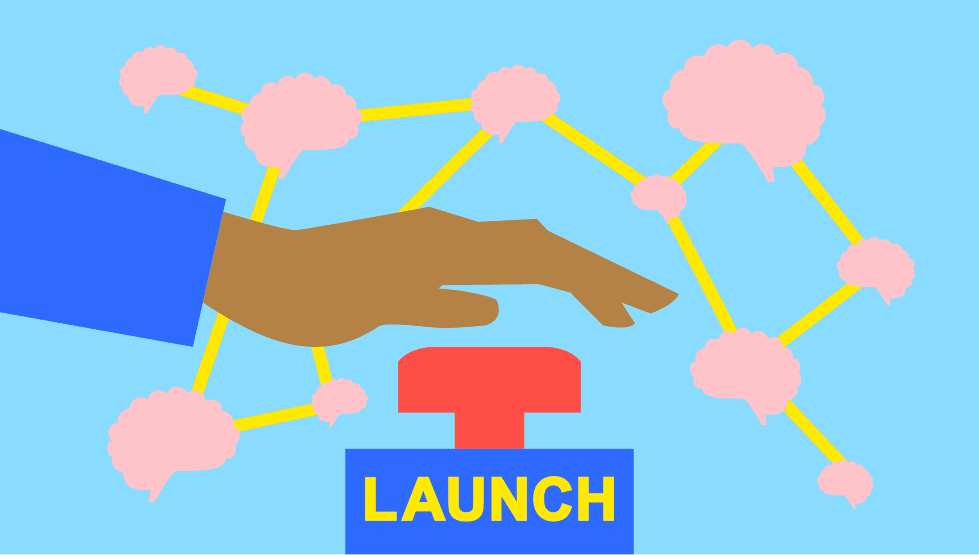
A behavioral-science blueprint for modern marketing—and a call for deeper, more human insights across brand lifecycles
Why most insight requests fail to move the business
Most B2C brand owners don’t suffer from a lack of data. They suffer from being data-rich but insight poor, and traditional methods not yielding insights that produce results.
Sound familiar? Even with a well staffed and structured insights function, and regular investments to build and maintain their brands, we find that most clients still experience some version of this issue. What’s more, good innovation ideas can get diluted up the pipeline when not recognized, because insights aren’t strong enough to empower confident decision making.
Marketers are still relying on traditional methods, which are too often “System 2” type rationalizations of past behaviors. They provide answers to questions that appear to make sense, but fail to predict behavior.
Why is this?
The biggest drivers of buying behavior aren’t fully conscious, easily articulated, or available on demand.
Behavioral science has shown that much of human judgment and choice is shaped by fast, automatic processes—what Nobel Prize winning economist Daniel Kahneman called System 1 thinking—rather than deliberate, rational explanation.
And yet, much conventional research is still built as if consumers can:
- accurately explain why they did what they did,
- predict what they will do next,
- and tell us the truth in clear language when asked directly.
They can’t, at least not reliably. So the question becomes:
What if the goal of market research wasn’t to ask consumers marketing questions, but to reveal better evidence of subconscious drivers and translate it into decisions across the marketing lifecycle?
That is what it means to connect the consumers’ subconscious mind to the marketer’s next decision.
Our Belief
Applying behavioral science methods throughout the marketing lifecycle connects consumers’ subconscious minds to marketers’ next decisions.
It also produces better results across product innovation, brand development, and marketing communications. Not as a one-off innovation or add on, but instead as an operating system for decisions: how we create, test, optimize, measure, and build brands over time.
And the terrain is rough. Because across the industry, persistent marketing heuristics still drive conventional research asks, despite decades of evidence from effectiveness research.
Let’s name one common misconception and dispel it with behavioral science:
Common Marketing Heuristic #1:
“Let’s just ask the consumer what we want to know.”
Behavioral science and consumer cognition research have demonstrated a consistent problem: explicit self-report measures are limited, and can misrepresent what people actually feel, notice, and do, especially for advertising response and brand choice.
What goes wrong in research briefs:
- Asking “Why did you choose this?” and treating the answer as causal truth
- Over-trusting brand claim diagnostics
- Filtering creative ideas based on what people say they liked
and lastly,
- Assuming your busy consumer can convert their complex emotional impulses about snacking on cookies into a convenient 5-point scale
Behavioral science correction:
Use implicit methods and behaviorally grounded designs to capture:
- automatic associations
- subconscious emotional response
- attention dynamics
- memory structure formation
The point isn’t to replace explicit feedback, it’s to supplement wherever possible with the system 1 insights that tend to truly drive results.
The Behavioral Science Marketing Lifecycle:
A framework for when to integrate behavioral science
If we are to truly embrace the power of behavioral science to create more effective brand, product, and marketing decisions, then there are multiple occasions on which the methods should be used. At Protobrand, we find it essential to include the consumer subconscious any time you want to:
1. Identify opportunities for transformational growth
Decision inputs: JTBD & Unmet Needs
Behavioral science reveals the real situations, tensions, and automatic motivations that trigger category entry and choice, often invisible in rational need-state frameworks.
What this unlocks:
Fuel growth by identifying opportunities grounded in how people actually behave, not just what they say they want.
Unlock Method:
Narrative Inquiry: We uncover the real-life context behind decisions — revealing the tensions, motivations, and “jobs” consumers are hiring brands to do.
Metaphor Elicitation: We decode the emotional and symbolic meaning of a category to expose unmet needs and high-potential opportunity spaces.
2. Optimize breakthrough ideas
Decision inputs: Idea Screening & Concept Illumination
Instead of validating ideas through stated preference alone, behavioral science identifies which ideas instinctively attract attention, generate emotion, and motivate action.
What this unlocks:
Screen, test, and optimize ideas with evidence that helps strong ideas survive the pipeline, without being diluted by over-rationalization.
Unlock Method:
Metaphor Elicitation: We reveal how people instinctively interpret creative ideas — mapping the metaphors that shape perception to sharpen and strengthen creative impact.
3. Optimize product design and experience
Decision inputs: Product Illumination & IHUT
Behavioral methods uncover how people experience products in real contexts. across form, occasion, and sensory response, beyond post-rational explanations.
What this unlocks:
Design products and experiences that feel intuitive, satisfying, and aligned with subconscious expectations.
Unlock Method:
Photo Elicitation: We follow consumers through real usage moments to uncover friction, workarounds, and unmet needs in context.
Response Latency: We capture instinctive, implicit reactions to features — surfacing what truly resonates beyond rationalized answers.
4. Grow relatable and desirable brands
Decision inputs: Brand Positioning & Stretch
Behavioral science reveals the associations, emotions, and unmet motivations that shape brand meaning, helping brands build mental availability, not just claims.
What this unlocks:
Brand strategies that resonate, scale, and grow by embedding themselves into memory and real-life usage contexts.
Unlock Method:
Metaphor Elicitation: We map the emotional territory brands occupy — identifying white space and stretch potential for greater relevance and desire.
5. Become truly consumer-centric
Decision inputs: Segment & Audience Illumination
Rather than segmenting only by attitudes or demographics, behavioral science surfaces what people really think, feel, and do automatically, and why.
What this unlocks:
Audience understanding that inspires teams, aligns stakeholders, and drives more meaningful impact across touchpoints.
Unlock Method:
Metaphor Elicitation: We uncover the emotional drivers behind decision-making — enabling brands to connect at a deeper, more human level.
6. Develop game-changing creative briefs
Decision inputs: Creative Inspiration & Creative Illumination
Behavioral science translates subconscious response into tangible creative inputs such as visual language, emotional cues, and memory triggers while testing resonance early.
What this unlocks:
Creative briefs that excite agencies, protect bold ideas, and connect directly to how audiences notice, feel, and remember.
Unlock Method:
Narrative Inquiry: We build a powerful library of consumer stories — equipping teams with real tensions and insights that fuel breakthrough briefs.
Behavioral Science Methods
At Protobrand, we use a variety of Behavioral Science methods, supplemented by the power of AI, to measure all of the above. A few examples:
Metaphor elicitation is a projective method which asks respondents to select an image that best captures their thoughts and feelings on a given topic, metaphor elicitation allows respondents to express their deep, conscious and subconscious associations with brands, products, and concepts through visual metaphors.
Narrative Inquiry allows us to delve into people’s experiences and emotions through the stories they tell. Story helps to understand the context in which the memory was constructed, in order to identify patterns which reveal the mental models that influence consumer behavior and perception.
With photo elicitation, respondents share a photograph of their own that helps to elicit stories of consumption. The parts of the brain that process visual information evoke deeper elements of human consciousness than do words.
Implicit Response measures user conviction through response latency testing, allowing us to track the exact speed at which the consumer connects your brand to specific themes or attributes. This works far better than relying on traditional surveys as it does not allow the consumer time to insert any external biases that may dampen the richness of data.
Lead marketing decisions with the consumer subconscious
If your insights work is meant to drive growth, it has to reflect how people actually make choices—not how they explain them afterward. Traditional research can be useful, but when it relies too heavily on self-report, it often captures rationalized stories rather than the automatic, emotional, and memory-based drivers that shape real behavior.
That’s why connecting the consumer’s subconscious to your next marketing decision is essential. It improves the way brands make decisions across the lifecycle: from identifying opportunities and strengthening ideas, to refining product experiences, building brand meaning, understanding audiences, and developing creative that people notice and remember.
If you’re ready to make your insights function more predictive and actionable, start with a simple step: look at where your current research approach depends on consumers to explain what they can’t easily access. Then supplement those moments with methods designed to capture attention, emotion, associations, and implicit conviction.
Interested in learning more about our Behavioral Science + AI approach? Book a demo today to learn more.